
Tabbouleh 4eva
I’ve chopped a genuinely unreasonable volume of
parsley in my life…
There was never a question about whether tabbouleh would be in the cookbook. The only question was whether I could write about it without getting emotional.
Sadly so many people confuse tabbouleh with some bulgar salad situation that has nothing to do with the real version: it is not a bulgur salad with some herbs in it. It is a herb salad with some bulgur in it. The bulgur is a guest. It is not the host. This isn't a preference or a regional variation or my family being difficult — though my family is available for that too. If you can see the bulgur before you see the green, something has gone wrong, and it went wrong long before it reached the table.
I know this because I have chopped a genuinely unreasonable volume of parsley in my life.
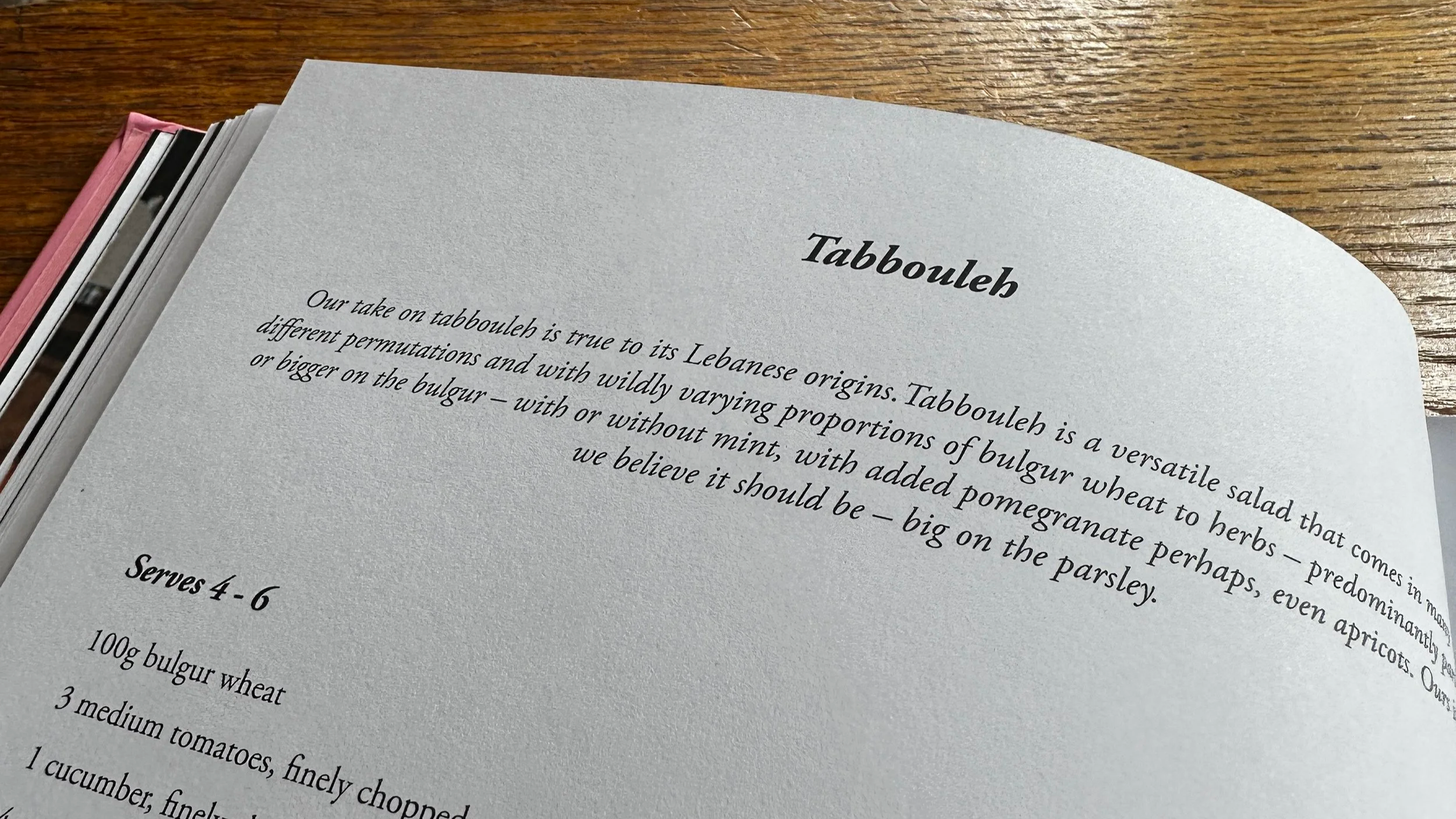
Our tabbouleh recipe, from Sohaila: the cookbook
Parsley doesn't wash off your hands properly, and I'm glad. It's green and slightly bitter and completely specific, and it still ambushes me on an afternoon when I walk into the Sohaila kitchen, where I'm briefly returned to the interesting chopper I was.
Why this recipe, and not something more impressive? Every cookbook has one dish behind it that is quietly used to explain its real personality.
Tabbouleh cannot be rushed and cannot be faked. There's no technique to hide behind and no sauce to apologise with. Parsley, mint, tomato, a small amount of fine bulgur, lemon, oil, salt — six ingredients, and one of them is salt, which barely counts. Everything depends on what you bought and how carefully you cut it, which is another way of saying everything depends on whether you were paying attention.
That's the whole philosophy of the restaurant, honestly. We have genuinely ambitious things on the menu, like Ellie's Mardi Gras poussin. But if you want to know whether a kitchen loves you, order the simplest thing on it.
I've been trying to work out why this dish, of all of them, means safety to me. I think it's because it was always there. Tabbouleh is not the centrepiece; nothing is dimmed for its arrival. It's on the table before you sit down and still on the table when everyone's slumped and talking too loudly, being picked at, going softer as the lemon gets on with its work. It's not the event. It's the room the event happens in.
It also means people are coming. Nobody makes tabbouleh for one — you cannot buy a small enough amount of parsley; the maths simply refuses. So it's a signal: there will be more of us than planned, it will go on longer than promised, and somebody is about to be handed a knife.
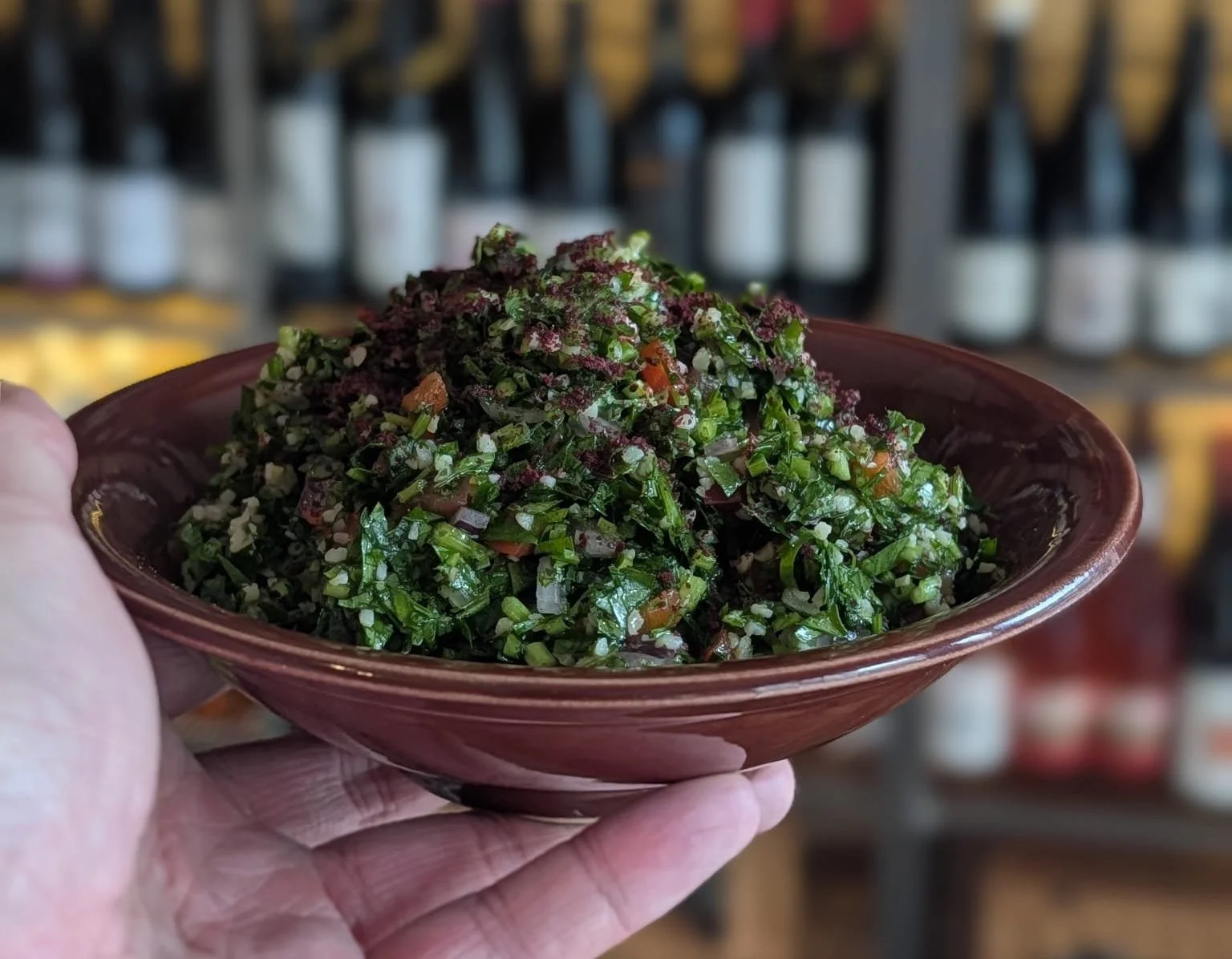
Tabbouleh, served at Sohaila
The recipe as we make it at Sohaila is my beloved aunt's. Fine bulgur, barely soaked — just the tomato juice and the lemon, ten minutes, no negotiating. It should be a texture in the salad, not a foundation for it. We're heavy-handed with the mint in a way that some people will write to us about. And we salt at the last possible second, because tabbouleh salted early isn't tabbouleh, it's soup with ambitions.
We've given it in weights, because that's what a cookbook has to do. Consider this my formal note of protest. Nobody I learned it from has weighed a single component of this dish in their life, and the correct measurement for parsley remains "keep going — more — that's still not enough."
Make it for a lot of people. Give someone a knife.